Showing posts with label emergency queen cells. Show all posts

Thursday, May 27, 2010

Nucleus Hives : Emergency queens emerged

I had the chance the other night to check on my nucleus hives and the one hive has had some emergency queens emerge (the queen cells are opened) on the bottom but their was no evidence of a laying queen. The queens that emerge will go for their mating flights over the next couple of days and once they are done with their flights, then they will begin laying. I want to see the brood pattern of a laying queen to determine how good she is. I am no longer in a rush to requeen my hives.
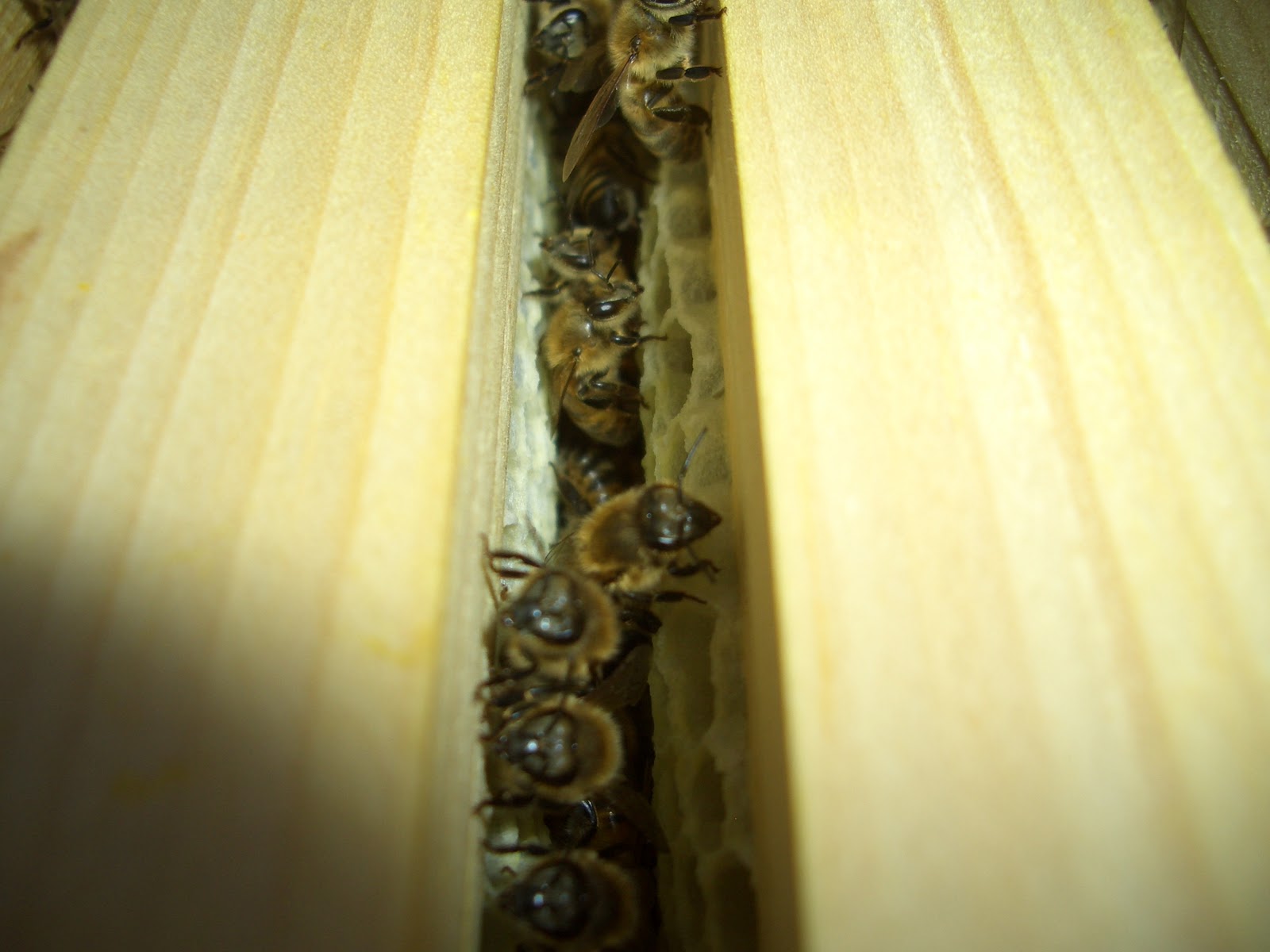
Frames are mostly covered by bees and all drawn out except for outside frame sides.
Notice the bee space between the wax foundation
I also had the chance to take a look at the honey supers which I had added May 16th. These frames were brand new and completely empty on that date. All of the frames are now mostly drawn out and filled with honey. I would say they are a good third done filling that super; which is insane. I am going to have to start making more frames!

Sunday, May 16, 2010

Nucleus Hives : Emergency queen present!

Today a full inspection was done on all of the hives in my home yard. The green hive appears to have a lot of honey in the top box. They may actually have too much honey in it and it may be hindering their ability to raise brood. It may also be causing them to be too crowded and make them want to swarm. Both of the large hives had many swarm cups in them but none of the cups had any queens in them.
 The Nucleus hives both have a few emergency queen cells formed up. The picture bellow shows a double queen cell. As in there are two queens currently developing side by side. (One higher and the other lower).
 This is a better view of those queen cells. See how the bees just chose a few cells to transform into queens in the middle of the frame? They choose which eggs to develop based on how old the eggs are and they begin to immediately feed it royal jelly.
Emergency queen cells
 This was what my little yard looked like at the end of the day. Notice the queen excluders and the honey supers sitting on top of the big hives. It is time to collect honey!
Large hives have honey supers added

Friday, May 14, 2010

Nucleus Hives : The beginning

My swarm hive from last year is doing very well and it looks like they are trying to supersede the queen. I want to keep these genetics so I have decided to try to make 2 nucleus hives from her. I do not know how old she is but I figure she is at least 2 years old. The nature of swarming is that the old queen leaves with half of the bees and bees rarely swarm on their first year. To make 2 nucleus hives from her I figured out which frame she was on and set that aside. I then took 2 frames of very young eggs and some capped brood and pollen frames with bees still covering the frames and placed them in my 5 frame nucleus box. I put empty frames to fill in the rest of the space. I did the same thing with the other box but took 3 frames this time. I placed the queen back in the original parent colony and replaced the frames that I took with drawn out comb. I then took these nucleus boxes and brought them to my other bee yard (my house). I have 2 full colonies here and they will have enough drones to breed with the queens that these nucleus hives produce. These nucleus hives will detect that they do not have a queen and they will start feeding some young larvae some royal jelly and they will raise emergency queen cells. These queens will emerge in 13 days. The first queen out will kill all of her rivals by tearing apart their cells and stinging them to death.
 Here is what the nucleus hives look like. I put some blocks in front to reduce the entrance so that my strong colonies do not rob them out. 
The bees were moved at the end of the day and therefore took new flights the next nice day and re-orientated themselves with their new surroundings.
They quickly can find pollen and honey and a good source of water. I was happy to see a lot of different colored pollen on the bees; this indicates that there are some good sources out there and that the bees have a lot of resources. I will check the hives soon to see that they indeed have started some emergency queen cells. This is the first time I have ever done this; so I am excited to see how it turns out!

This happened May 10th, 2010. I am running behind on my blog posts!